CaptiveAire Systems: Buyer Guide for Kitchen Hoods
CaptiveAire Systems: What Buyers Should Compare

Captiveaire systems are packaged commercial kitchen ventilation setups built around a canopy hood, grease filters, exhaust fan, and usually make-up air. Restaurant owners and facility buyers compare them because a hood is not just a stainless box over the range. It is the air-handling backbone that keeps smoke, heat, and grease out of the dining room and keeps the cooking line legal to operate. For more background, see Learn more about captiveaire systems.
When people search for captiveaire systems, they are usually matching a cooking line to a Type I exhaust package: overhang, capture velocity, duct routing, fan location, and how make-up air will replace what the hood pulls out. This guide walks through those decisions in practical terms so you can brief a designer, compare bids, and avoid undersized equipment.
You do not need a manufacturer catalog memorized to buy well. You need a clear picture of what is cooking, how much air must move, which codes apply, and who will clean and inspect the system after opening day.
What CaptiveAire-Style Packages Actually Include
A typical captiveaire systems package is an engineered exhaust assembly, not a single catalog SKU. The canopy (wall-mounted or island) sits over appliances and is sized for the line length plus required overhang. Behind the visible stainless are baffle filters or a listed filter assembly, a plenum, and a transition into grease duct. Outside or on the roof, an exhaust fan rated for grease-laden air pulls the airstream. Many bids also include a make-up air unit so the kitchen is not starved of replacement air.
Fire suppression is usually specified as a listed wet-chemical system with nozzles in the plenum, over appliances, and sometimes in the duct, plus a manual pull and automatic fuel/electric shutoff. Controls may include a lighted hood, interlocks so cooking equipment cannot run without the fan, and sensors that prove airflow. Grease management can include listed filters, a grease cup or trough, and, on some designs, listed pollution-control or high-efficiency filter modules. Ask what is factory-packaged versus field-installed so the bid is apples-to-apples.
Buyers should also confirm listed listings: UL 710 (or equivalent) for the hood, UL 762 for grease exhaust fans, and NFPA 96 alignment for duct, access, and clearance. Captiveaire systems sold as a coordinated package can reduce mismatch between hood static pressure and fan selection, but the installer still owns duct length, elbows, and roof curb details that change real-world CFM.
Canopy types and cooking-line layout
Wall canopy hoods are the default for a back-wall line. Island or double-island canopies serve exhibition cooking and need capture on more than one face, which usually means more overhang and more exhaust air. Low-proximity or backshelf hoods can work for limited equipment but are not a substitute for a full canopy over high-plume appliances such as charbroilers. Map each appliance under the hood: fryers, griddles, ranges, broilers, and woks produce different plume heights and grease loads.
Leave space for filter removal, light replacement, and suppression nozzle access. A hood that looks flush in a rendering can be unserviceable if the filters cannot slide out or if the fire system blocks the grease cup. Include landing tables and pass-throughs in the drawing so staff do not park carts in the capture zone.
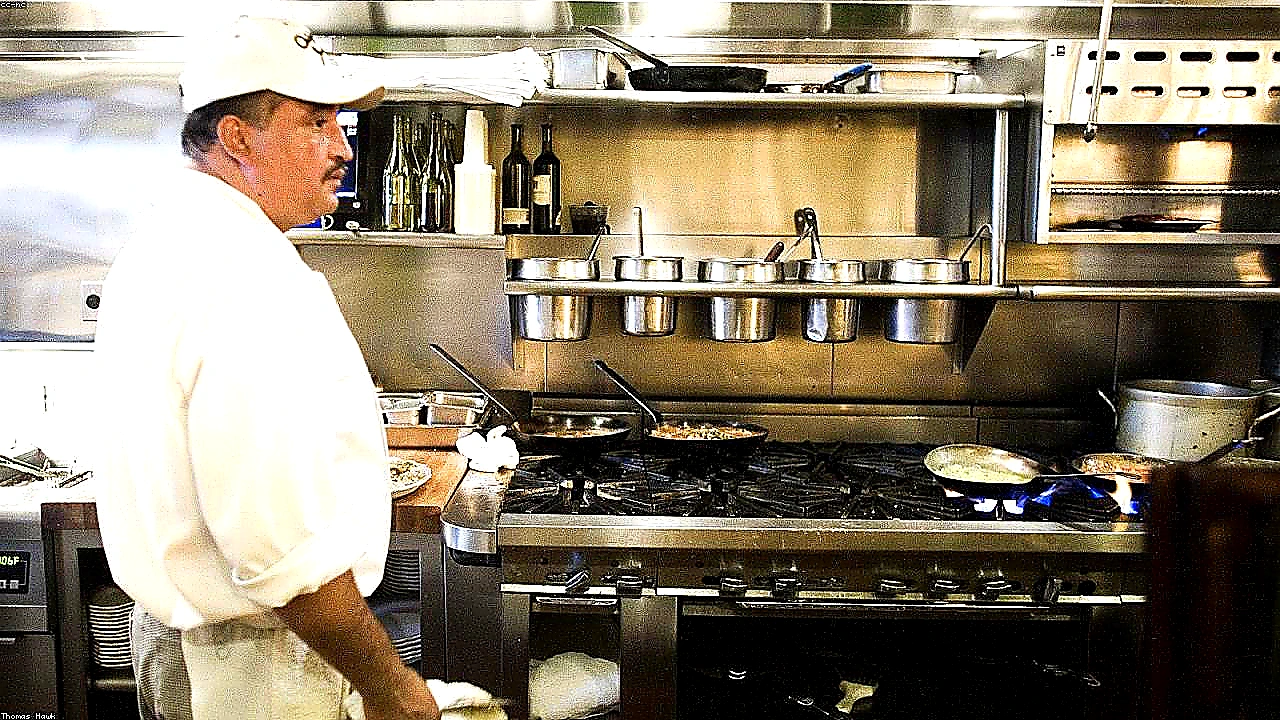
Sizing, CFM, Overhang, and Make-Up Air
Hood sizing starts with the cooking equipment, not the room square footage. Designers use listed hood formulas, manufacturer capture data, and sometimes the IMC or local mechanical code exhaust rates by appliance type. A short line of steamers needs far less exhaust than a charbroiler and wok battery of the same length. If a bid quotes a round CFM number without an appliance schedule, treat it as incomplete. Ask for the calculation method, the design duty (idle versus cooking), and the static pressure the fan is selected against.
Overhang is the extra canopy that extends beyond the cooking surface. Typical planning ranges are often on the order of six inches or more on the ends and a larger front overhang on wall hoods, with island hoods needing capture on all exposed sides. Local listings and the hood's UL report control the minimums; do not shrink overhang to fit a tight ceiling grid. Short overhang is a common reason smoke rolls out at the front edge during a busy service.
Make-up air should replace most of the exhausted air so doors do not slam and pilots do not spill. Many kitchens target tempered make-up air introduced at or near the hood, sometimes as an integrated short-circuit or air-curtain design, sometimes as a separate unit discharging at the ceiling. Unbalanced exhaust creates negative pressure that pulls dining-room air, odors, and even outdoor dust through every gap. Confirm heating (and cooling, if specified) capacity for winter morning start-up, and confirm the make-up air fan is interlocked with the exhaust fan.
Static pressure, duct, and fan location
CFM on a nameplate is meaningless if the fan cannot overcome duct friction, grease filters, and rooftop fittings. Long horizontal grease duct, extra elbows, and a high-velocity pollution-control unit all raise static pressure. Have the mechanical contractor provide a duct layout with equivalent length and a fan curve, not only a brochure CFM. Roof fans need listed grease collection, proper curb height, and access for cleaning. In-line fans in the grease path must be listed for that use.
Variable-speed or demand-control ventilation can cut energy when the line is idle, but sensors must still guarantee capture during a full fire-up. If you use demand control, require commissioning that proves capture with smoke pencils or a listed test method at both minimum and design speed.
Codes, Fire Suppression, and Grease Management
Commercial exhaust is a life-safety system. NFPA 96 (as adopted) and the local fire and mechanical codes govern hood listing, duct construction, clearances to combustibles, access panels, and cleaning frequency. Many jurisdictions also enforce IMC exhaust rates and energy codes that affect make-up air and demand-control options. Your authority having jurisdiction (AHJ) may require drawings, a suppression submittal, and a final inspection before the gas valve is turned on. Build that timeline into the opening schedule.
Type I hoods are for grease-producing cooking. Type II hoods handle heat and steam only and must not be used over fryers or broilers. Mixing the two on one duct is a common bid error. Ducts that carry grease-laden air typically need welded liquid-tight construction, slope to a drain or cleanout, and listed access at changes of direction. Wrap or listed enclosure may be required where the duct passes through concealed spaces. Never treat kitchen exhaust like ordinary HVAC duct.
Grease management is both a filter problem and a housekeeping problem. Listed baffle filters should be removable, dishwasher-safe or soak-safe per the manufacturer, and seated so air cannot bypass the edges. Some captiveaire systems offer higher-efficiency filter stages; those stages still need a cleaning schedule or they become a restriction and a fire load. Downstream, the duct and fan collect what the filters miss. A written cleaning contract aligned with NFPA 96 frequency (often more often for 24-hour or solid-fuel cooking) is part of owning the system, not an optional extra.
Suppression coordination
The hood, appliances, and suppression must be designed as one layout. Nozzle aiming changes if you swap a range for a charbroiler. Fuel shutoff and electric shutoff must drop cooking energy when the system dumps. Keep the manual pull unobstructed and train every shift. After any discharge, the kitchen stays down until a licensed technician resets listed components and the AHJ allows reopening. When you remodel the line, budget a suppression recertification, not only new stainless.
Installation, Commissioning, and Daily Operation
Factory packaging does not replace field quality. The installer must hang the hood plumb, seal the duct per listing, set the fan rotation correctly, and balance exhaust against make-up air. Lights, switches, and interlocks should be tested with cooking equipment in place. Capture should be checked at the front edge during a simulated busy cook, not only with the line cold. Document as-built CFM if a balancer is on the job; that number is your baseline when filters load or a belt slips later.
Training matters as much as stainless. Staff should know how to remove and clean filters without bending them, how to empty grease cups, and that foil or cardboard on filters is a fire and airflow failure. Managers should log filter cleaning, hood surface cleaning, and professional duct cleaning dates. If the hood smokes at the front, the first checks are dirty filters, a tripped fan, a closed make-up air damper, and a change in the appliance lineup-not a random CFM increase on paper.
Energy and comfort show up after opening. Over-exhaust without tempered make-up air makes the kitchen loud, cold, and expensive. Under-exhaust makes the dining room smell like the fryer. Seasonal commissioning in the first winter is worth scheduling. If you operate solid fuel, expect stricter duct design, spark arrestors as required, and more frequent cleaning. If you add a smoker or extra fryer later, treat it as a redesign, not a furniture move.
Comparing bids without fake price anchors
Ask each bidder for the same scope: hood model and listing, length and overhang, filter type, exhaust CFM and design static, fan model, make-up air CFM and heating, duct responsibility, suppression brand and coverage, controls, startup, and warranty. Note what is excluded: roof work, gas valve, electrical, and fire watch. Lowest price often omits make-up air or listed access doors. Total cost of ownership includes filter labor, duct cleaning, and energy for simultaneous exhaust and heat. Choose the package that matches the menu and the inspector, not the shiniest brochure.
Cleaning, Maintenance, and When to Upgrade
A well-specified captiveaire systems install still fails if grease is allowed to cake in filters and duct. Daily or shift-based filter cleaning keeps capture stable and reduces the fuel available in a hood fire. Wipe canopy interiors on a set cadence so grease does not drip onto food or staff. Professional hood and duct cleaning should include photographs of before-and-after access points so you can verify the work reached the fan and the vertical riser, not only the visible canopy.
Watch for warning signs: smoke at the pass, excessive kitchen negative pressure, fan vibration, water stains at the curb, or suppression nozzles coated in grease. Those are maintenance and inspection issues, not reasons to ignore the system until a failed health or fire visit. Keep spare listed filters on the shelf; running with missing filters is both a code and a capture problem.
Upgrade when the menu changes, when you add high-grease appliances, when the hood is too short for a new line, or when energy codes and comfort problems justify demand-control or better make-up air. Replacement is also justified when the canopy is damaged, listings cannot be documented, or the duct cannot be cleaned because access was never installed. For buyers comparing captiveaire systems to other listed packages, prioritize documented listings, service access, and a mechanical partner who will stand at the inspection-not brand slogans alone.
Frequently Asked Questions
What are captiveaire systems in a commercial kitchen?
They are packaged ventilation assemblies built around a listed canopy hood, grease filters, a grease-rated exhaust fan, and usually make-up air and controls. Fire suppression is coordinated with the hood and appliances. Buyers should treat the package as an engineered system, not a decorative stainless cover.
How is CFM determined for captiveaire systems?
CFM is derived from the appliance schedule, the hood's listed capture method, code exhaust rates where they apply, and the duct system's static pressure. A responsible bid shows the calculation and the fan selection, not a generic number copied from another job. Changing the menu or adding a broiler usually changes the required exhaust.
Do I always need make-up air with a CaptiveAire-style hood?
Most Type I exhaust volumes are large enough that dedicated make-up air is required for comfort, door operation, and proper capture. The AHJ and mechanical code will often require it. Skipping make-up air to cut cost commonly creates negative pressure, drafting issues, and smoke roll-out.
How often should the hood and duct be cleaned?
Filters are typically cleaned on a daily or shift schedule depending on grease load. Duct and fan cleaning follow NFPA 96 frequencies as adopted locally, which are more often for heavy grease or solid-fuel cooking. Keep written logs and photos from the cleaning contractor for inspections.
Can I reuse an existing hood if I remodel the cook line?
Only if the existing listing, length, overhang, exhaust rate, and suppression coverage still match the new appliances. Swapping in a charbroiler or extra fryer often means a new calculation and possibly a new canopy and nozzles. Have the designer and the fire-suppression contractor review the change before equipment is ordered.
Conclusion
Captiveaire systems succeed when the hood, fan, make-up air, grease path, and fire suppression are sized to the real cooking line and installed to listing and code. Use an appliance schedule, overhang and CFM documentation, and a clear split of duct and startup responsibility when you compare bids.
Next, walk your current or planned line with a kitchen designer and mechanical contractor, confirm AHJ requirements, and put cleaning and filter labor into the operating budget before opening. A listed, balanced, maintainable package protects guests, staff, and the ability to cook every service.
Looking for a ready-to-order option? Explore this captiveaire systems on The Horeca Store.
Related Guides
- Captiveaire Systems Inc
- Water Cooled Ice Machine Buying Guide for Kitchens
- 72 Chef Base Refrigerator Buying Guide


Comments
Post a Comment